


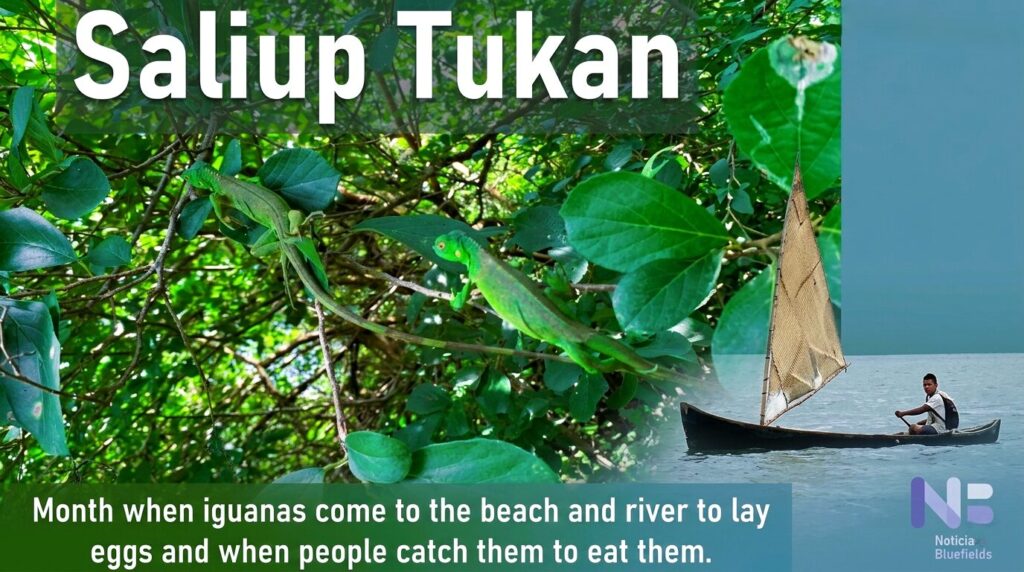
According to the traditional calendar of the Rama people, March is remembered as the time when iguanas would arrive at lagoons and rivers to lay their eggs, marking a season of abundance for their community. For generations, iguana has been part of their diet and ancestral memory.
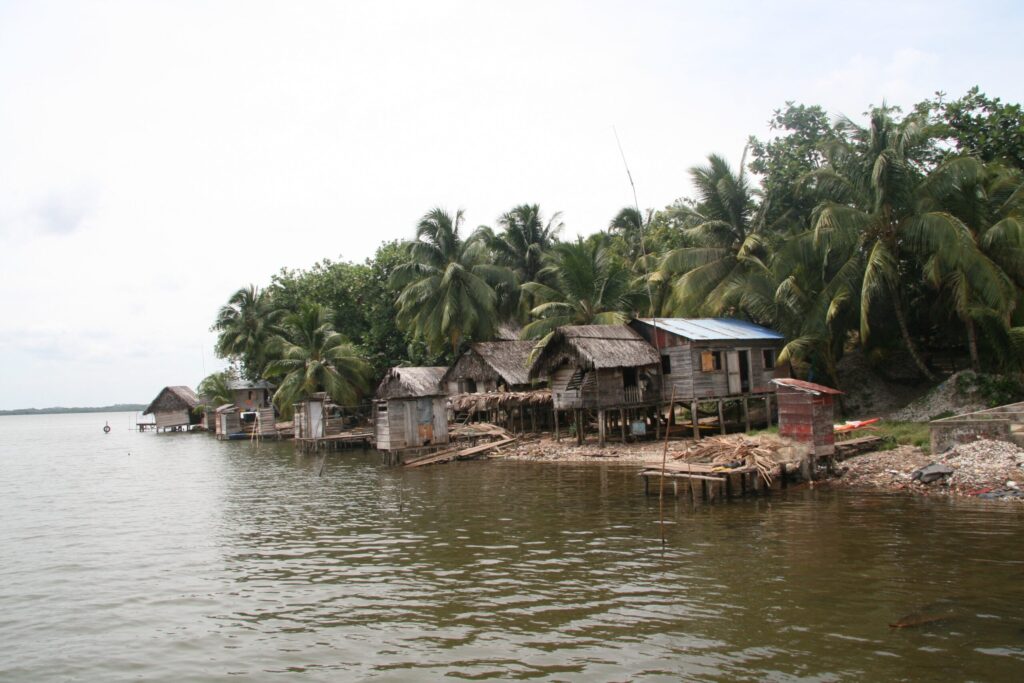
The Rama are one of the original Indigenous peoples of Nicaragua, with a rich and ancient history and culture. Their ancestral territory is located south of Bluefields Lagoon in the South Caribbean Coast Autonomous Region, and includes communities such as Rama Cay, Sumu Kaat, Tiktik Kaanu, Indian River, and Bangkukuk.
Traditionally, the full lagoons and rivers in March signaled the arrival of iguanas ready for hunting and egg gathering, which were used to prepare stews and shared community meals.
In some mestizo areas of the country, especially around the Easter season, iguana is also prepared as pinol de iguana, a traditional dish.
However, the green iguana (Iguana iguana), which has been consumed in Nicaragua for centuries as a source of protein, faces pressure from hunting and human exploitation in different parts of its natural range.
It is important to honor and respect these ancestral traditions, while also supporting environmental protection and wildlife conservation, so that natural cycles and the cultures that celebrate them are not lost.
READ ALSO Nicaragua’s Caribbean Autonomy faces a crucial test