

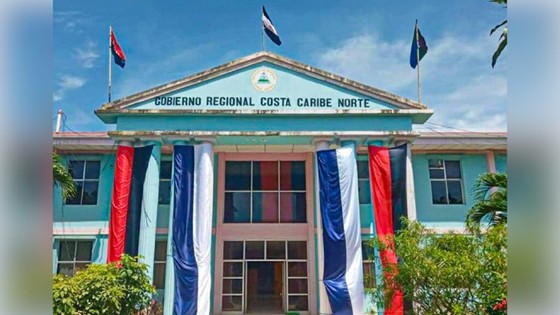
Along Nicaragua’s remote Caribbean coast, dense rainforest stretches toward the Coco River, forming a natural border with Honduras. For generations, Indigenous and Afro-descendant communities have governed these territories under a special autonomy regime unique in Central America. Today, local leaders say that autonomy is being steadily eroded.
To understand the stakes, it helps to go back nearly four decades.
In 1987, after a violent conflict between the Sandinista government and Indigenous armed groups, Nicaragua passed a landmark Autonomy Statute. The law recognized communal land ownership, Indigenous languages, and regional self-government across two vast autonomous regions on the Caribbean coast. The arrangement was widely regarded as one of the most advanced legal frameworks for Indigenous rights in Latin America at the time.
On paper, that framework remains intact.
In practice, community leaders, activists and regional observers describe a different reality: growing political centralization, weakened local institutions and expanding extractive projects including mining and logging concessions in Indigenous territories.
“Autonomy was never meant to be symbolic,” says an Indigenous leader now living in exile. “It was supposed to protect our right to decide what happens on our land.”
Over the past decade, tensions have intensified in the Bosawás Biosphere Reserve, one of the largest tropical forests in the Americas. Indigenous organizations report repeated invasions by armed settlers seeking land for cattle ranching and agriculture. Community monitors say dozens of Mayangna leaders have been killed in land-related violence in recent years.
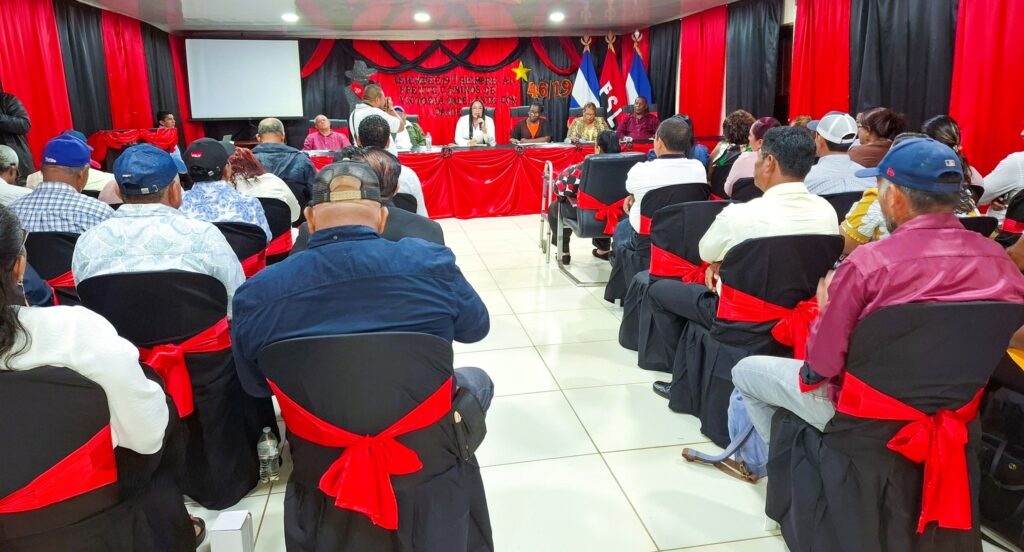
Nicaragua’s government maintains that autonomy is functioning and that development projects are necessary for national progress. But critics argue that mining and forestry concessions have often moved forward without effective processes of Free, Prior and Informed Consent a standard recognized under international law for Indigenous territories.
Political changes have compounded the concern. Since the nationwide crisis that erupted in 2018, power has become increasingly concentrated in the executive branch. In recent regional elections, pro-government parties consolidated control over the autonomous councils, further reducing independent local representation, according to regional observers.
The consequences are not only political. Displacement has reshaped entire communities. Many families have migrated to Nicaragua’s capital, Costa Rica, or the United States. Younger generations face the erosion of language, land ties and cultural continuity.

For residents of the Caribbean coast, the debate is not abstract. It centers on land, survival and self-determination.
Nicaragua’s autonomy model was born out of conflict in the 1980s, when Indigenous resistance forced negotiations with the central government. Today, the region stands at another crossroads: whether autonomy will remain a meaningful system of self-government or become a formal structure with diminishing authority.
In the forests along the Coco River, the question is no longer whether autonomy exists in law. It is whether it still lives in practice.
READ ALSO Autonomía en resistencia: el Caribe nicaragüense frente a los nuevos desafíos del poder